




How To Check a Fuse Box
How To Replace a Fuse
Located inside or outside of your home is a fuse box that contains a fuse for each of your home's circuits. A fuse provides protection for each of your electrical circuits by stopping the flow of current if an overload or fault occurs. When an electrical short occurs or the load on your circuit becomes too great, the fuse on that circuit burns out and breaks the circuit; this is what is referred to as a "blown fuse." If your home uses circuit breakers instead of fuses, click here.
Before electricity can be restored, the fuse must be replaced with a new fuse. However, even before you replace the fuse, you must take steps to ensure that it is safe to do so. Turn off or unplug all of the devices that are plugged into the circuit. Make certain that no dangerous condition exists before restoring power.
Replace the fuse with a fuse that is of the proper rating for the circuit. For instance, if the circuit is rated for 15 amps, use a 15 amp fuse. Never use anything other than a fuse of proper rating.
When removing or inserting a new fuse, NEVER touch the metal parts of the fuse. If your fuse box is equipped with a master switch to cut power to the fuse box, cut the main power prior to replacing the fuse.
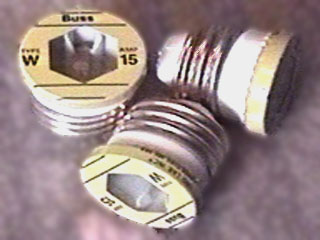
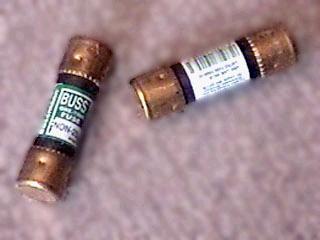
Electricity should now be restored to the circuit. If the fuse blows again before you have turned anything on or plugged anything in, a serious wiring fault may exist. Consult a qualified electrician immediately.
If the fuse blows after plugging in or turning on a device, that device may have a short or may be placing too much of a load on the circuit.
If no fuses were blown and you still do not have power at an outlet, make certain that the switch, if any, that controls the outlet is turned on. If you can find no problem, the outlet, switch, wiring or some other component may be at fault. Also, the outlet may be on a GFCI branch circuit. Refer to the guide for checking a GFCI outlet.
Caution: Please read our safety information before attempting any testing or repairs.


