




How To Control Crabgrass
Crabgrass is a warm season grass that does its most vigorous growing in June and July. Crabgrass is killed by the first frost of the season. If you live in a warmer climate it may only go dormant or semi-dormant during the cooler months. The way to deal with crabgrass is to get it before it gets going.
What Crabgrass Likes
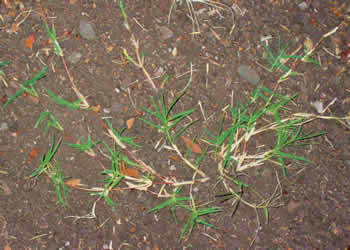 |
If you make a nice home for it in your yard, crabgrass will do very well. By knowing your enemy, you will know what not to do. Crabgrass likes warm weather and sunshine. It doesn't mind nutrient poor soils. It likes thin turf so there is plenty of sun shining down on it. Furthermore it likes short lawns, again so it can gather the suns warming rays. Crabgrass dies every year in all but the warmest climates but it leaves seed to carry on its legacy.
What You Can Do to Control Crabgrass
First, deny it sunshine. Mow your lawn to a height of 2 1/2 to 3 inches. Fertilize your lawn so that it fills in and keeps sunlight off the ground. Reseed thin patches in your lawn, again, to deny the crabgrass seeds sunshine. These are all things you should be doing anyway. Keeping your lawn healthy is the most effective way to prevent crabgrass. In fact, keeping a healthy lawn is the best way to protect it from all invasive weeds and disease.
Next, as another preventative measure, use pre-emergent herbicides. Pre-emergent just means "kill it before it starts growing". Even in warmer climates, pre-emergents are beneficial. Most people will be applying the herbicides in early spring, but in subtropical zones, like Southern California, people will apply them in December and January. Note though that most varieties of these herbicides will also inhibit desirable seed growth. So time your reseeding so that the grass seeds are not stopped by the herbicide.
In the summer months, there isn't much you can do to fight crabgrass. It is a fast-growing, vigorous weed. The best plan is to prevent it from getting a hold in your lawn next year. Deal with crabgrass before it becomes a problem.


