




How to Check the Air Flow in your DryerIf the flow of the air in the clothes dryer is impeded, the clothes will dry slowly or not at all. Also, a blockage in the vent system can be a fire hazard. Caution: Please read our safety information before attempting any testing, maintenance or repairs. Check the vent for proper air flow by placing your hand over the exterior vent while the dryer is running. You should feel a strong flow of air. If you feel no air or the flow is weak, follow the steps below. The first, and easiest, thing to check is the lint trap. It is located either on top of the dryer or possibly just inside the door. Remove any lint that has built up in the lint trap. Cleaning the lint trap should be done regularly, even as often as after every load. Do not operate the dryer without a lint trap in place. If the lint trap wasn't the problem, look behind the dryer and check that the vent hose is securely connected to the dryer and the exterior vent. Also check that the hose is not bent or kinked and causing a blockage.
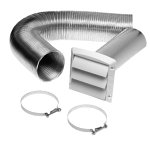
If the vent hose appears to be properly installed, then it will be necessary to check for blockages inside the vent. Unplug the dryer, and move it as necessary so that you can work behind it. Remove the end of the vent that connects to the dryer. Inspect the vent for the build up of lint or any other blockage. Make sure there are no holes or tears. Also inspect the vent on the dryer side for any blockage. At this time it is a good idea to vacuum any lint that has accumulated beneath the dryer. When reattaching the vent you should use the shortest length possible and it should be arranged so that no low points (in which lint can accumulate) exist between the dryer and the exterior vent. 
|
 |
|
