




How to Check the Dryer VentThe proper venting of a dryer is critical. Improper venting increases the risk of fire through the build up of lint. A typical vent hose is about four inches in diameter. It can be made of rigid steel or aluminum, semi-rigid aluminum, flexible foil or flexible PVC / vinyl. The vent hose connects from the rear lip of the dryer to the lip of an exterior vent and should be held in place on both ends with a band clamp. Caution: Please read our safety information before attempting any testing, maintenance or repairs.
The safest choice for a vent hose is a rigid metal. There are two reasons for this, first, the rigid metal eliminates the sagging that occurs in flexible venting. Sags allow lint to accumulate in the vent and represent a fire hazard. Second, the metal is not flammable and helps contain the fire if the lint does ignite. The down side to the rigid vent is that it is more difficult to connect to the dryer because you must be able to connect it after the dryer is in place. A reasonable alternative is a semi-rigid aluminum vent. This material is fairly fire resistant and less prone to sagging. Because it is flexible, you can connect it to the dryer before moving it into place. The foil coated and plain PVC / vinyl vent hoses are NOT recommended. These hoses are not very fire resistant and are prone to sagging. In all cases, the venting you use should be of the shortest length possible and should be arranged so that no low points (in which lint can accumulate) exist between the dryer and the exterior vent. Periodically, you should inspect your venting to make sure that it is clear of obstructions, such as lint or rodent intrusion. Make sure there are no holes or tears. Inspect the exterior vent for obstructions such as plants, weeds or objects placed against the vent. It is also advisable to vacuum any lint that has accumulated beneath the dryer. 
|
 Before checking the vent, unplug the dryer or shut off the power at the fuse box or breaker panel to avoid an electrical shock hazard.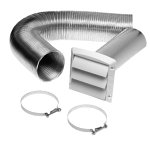
 |
|
