




How To Use a Blow Bag to Clear a Drain
A blow bag is a heavy duty rubber bladder that attaches to a hose, is inserted into a drain and uses water pressure to clear a clogged drain. Blow bags are very effective for clearing slow or completely clogged drains. They can be effective in situations where drain snakes are not, like on greasy or gooey clogs.
The bladder is like an uninflated balloon. It fits easily into a drain pipe. When the water is turned on, the bladder inflates with water and wedges itself in the pipe. The bladder then releases pulses of pressurized water to blast away and push clogs out of the pipe and into the sewer. Drain snakes rotate a sharp blade or other tip attachment to break up clogs. However, greasy and gooey clogs just let the snake pass right through. The grease stays in place and continues to clog the pipe.
Blow bags come in various sizes, to fit different drain pipe diameters. Select the correct size for the drain you need to clear. Attach the blow bag to a garden hose. A cold water source will be fine, but sometimes hot water can be very effective at dissolving clogs. To use hot water, attach the garden hose to the hot water heater's drain valve.
The blow bag will be inserted into the drain pipe. Do not insert it into a toilet or a sink drain. It may not be able to create enough friction to hold itself in place. Also, it might damage materials that cannot withstand the strain placed by the expansion of the bladder. Instead, it is better to insert the blow bag directly into the drain pipe. This can be done by removing the "P" trap under a sink, removing a toilet from the flange underneath or accessing a "clean out" in your waste system.
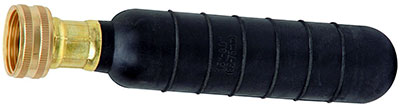
Once you have access to the waste pipe, insert the blow bag and hose into the pipe as far as it will go. Don't force the bladder in. There may be bends in the pipe and forcing the bag in may result in it getting stuck. If it does get stuck, try turning the hose clockwise while gently pulling it out. If you turn it counter-clockwise, you may unscrew the bag from the hose and end up with a much more difficult problem.
Hold the hose in place and turn on the water. The bag will inflate and water will start pushing on the clog. Check around other drains, toilets or any possible water outlet to make sure water is not backing up into or outside your house your house. If the blow bag has a drain or vent line between it and the actual clog, the water may instead go out through the drain or vent. If that happens, relocate the blow bag to a waste pipe closer to the clog and start again. Keeping checking for back-ups while the hose is running. Let the hose run for half an hour or more to give it time to push the clog out.
To remove the blow bag, turn off the water, wait a few seconds for it to deflate and then gently pull it out from the drain. Again, if it gets stuck, turn it clockwise while pulling to get it past any obstacles. Reconnect the section of pipe or clean-out cap you removed earlier and you should now have a clear running drain.
Final note: A home's water supply system is pressurized. The water supply pipes always have internal pressure. When a pipe breaks, you get a leak, or a flood. A home's drain, waste and vent system is not pressurized. Water flows through by gravity alone. The drain can withstand pressure, but most of the time the only pressure it is subjected to is the weight of draining water. When you use a pressure device to clear a clog, you are putting pressure on the drain pipes. There is a risk of a weak connection or corroded pipe bursting. The risk is not large, but it does exist. Likewise, a drain snake or chemicals can also damage pipes. So, ultimately, if a clog has to be cleared, it has to be cleared and there is always a risk that additional repairs will become necessary.


